
Maruti Suzuki India's production in December 2022 was lower by 17.96 per cent at 124,722 units, according to a regulatory filing by the company. The company had a total production of 152,029 units in the same month a year ago. Production in mini cars and compact segment, comprising models such as Alto, S-Presso, Baleno, Celerio, Dzire, Ignis, Swift and WagonR, was lower at 83,753 units last month as compared to 106,090 units in December 2021.
The stock of auto component major Bosch was up 2.5 per cent on Wednesday and in the process hit its 52-week high. Expectations of higher volumes of medium and heavy commercial vehicles' (M&HCV), rise in content supplies on account of BS VI stage 2 implementation from April, and improved profitability are some of the positives for the stock. In addition to this, the company appointed a new managing director and joint managing director last week, which will come into effect from July 1.

Pakistan military spokesperson Lieutenant General Ahmad Sharif Chaudhry told a hurriedly called press conference in Islamabad at around 4 am that th Pakistan air force's Nur Khan (Chaklala, Rawalpindi), Murid (Chakwal) and Rafiqui (Shorkot in Jhang district) airbases were targeted.

DeepSeek is a case in point on how economic interdependence between nations are utilised for geopolitical ambitions and global domination efforts, observes China expert Srikanth Kondapalli.

Maruti will showcase its first concept electric vehicle, the e-SURVIVOR; M&M it's six new EVs, including two futuristic concepts

The Indian Space Research Organisation (ISRO) successfully launched its third and final developmental flight of Small Satellite Launch Vehicle here on Friday whose payloads can be used in applications like satellite-based surveillance, disaster and environmental monitoring, fire detection, volcanic activity among others.
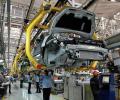
Automobile manufacturers are likely to report strong numbers for the September quarter of Financial Year 2023-24 (Q2 FY24), riding on growth across segments and offset by a marginal drop in overall two-wheeler (2W) volumes. Higher average selling price (ASP) year-on-year (YoY), which was necessitated by price hikes taken by original equipment manufacturers (OEMs), and an improved product mix will also aid revenues and margins. Moreover, commodity prices are down on a YoY basis, leading to higher margins in earnings before interest, taxes, depreciation and amortisation (Ebitda).

'It is going to be extremely rapid and anybody who is not there, be it investor, manufacturer, supplier, will miss out.'

Proliferation of home chargers of around 7 KWh and above, which take six to seven hours to fully charge a car depending on the model, bring running costs down by a third or so. That, coupled with the increasing range of modern electric cars, can lead to a massive increase in sales.

Larger listed domestic-focused tyre companies have underperformed the benchmarks in the last three months but exporter Balkrishna Industries has bucked the trend. The company, which exports off-highway tyres, has generated 43 per cent returns in this time compared to MRF and Apollo Tyres, which are down 5-10 per cent. In addition to better-than-expected performance in the March quarter, exports and market share gains have helped Balkrishna pull ahead of peers.

This number is more than the total number (1,071) of electric cars sold in India in calendar year 2019. MG has stopped registrations for the ZS and will cater to 2,409 of the total bookings.

Among the cities that have fully implemented their projects are Agra, Varanasi, Madurai, Coimbatore, Udaipur, Pune, Surat, and Vadodara

Ratings agency ICRA on Wednesday revised downwards growth forecast for the domestic passenger vehicles industry to 8-11 per cent in the ongoing fiscal from the earlier estimate of 14-17 per cent on account of the ongoing semiconductor shortage. Similarly, for the two-wheeler segment, it said the volumes are expected to contract by 1-4 per cent in FY2022 against an earlier prediction of 6-8 per cent growth as affordability and demand sentiments of target clientele was hit sharply by the second wave of COVID-19 pandemic. With around 5 lakh units of production lost by various automakers in the passenger vehicles segment due to the semiconductor shortage, ICRA said the earnings loss for the OEMs (Original Equipment Manufacturers) could be around Rs 1,800 crore to Rs 2,000 crore for the ongoing fiscal.

The commercial vehicle business is one of the mainstays for the Tata group, highlighting the importance of Girish Wagh's appointment.

Companies expect recovery in second half of fiscal as BS VI approaches, claim banks and NBFCs showing greater interest in financing.

Artificial Intelligence, innovation and next-generation technologies figured prominently during the high-stakes discussion between Prime Minister Narendra Modi and US President Donald Trump at the White House, as the two sides announced transformative measures, including the US-India TRUST initiative, roadmap on accelerating AI infrastructure and INDUS Innovation, to boost tech ties.

The operation to douse the blaze at a commercial building in Mumbai concluded after more than five hours on Friday afternoon, civic officials said.
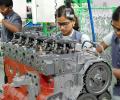
Cummins India will soon start producing fuel-agnostic engine systems at the Tata-Cummins plant in Phaltan in Satara district of Maharashtra, senior officials at Cummins India said. The firm will start limited production by the end of 2023 and mass production will likely begin by 2024, the officials said.

Towards the end of February, the Reserve Bank of India (RBI) restored the risk weighting on banks loans to non-banking financial companies (NBFCs; including to microfinance institutions, or MFIs) to 100 - back to its November 2023 position - from 125. It is only a partial relief though. "Higher risk weighting on unsecured lending continues to be in place while the same on bank funding to NBFCs has been done away with. "This is a positive step by RBI," says Rajiv Sabharwal, managing director (MD) and chief executive officer (CEO), Tata Capital.

Vehicles from Assam are now allowed to enter Meghalaya, a senior police officer said.

Passenger vehicles, motorcycles, bikes and commercial vehicles made their presence felt at the Munich Auto Show.

Notwithstanding robust volume growth and a strong performance from Jaguar Land Rover (JLR), Tata Motors, the country's second-largest automobile (auto) manufacturer by market capitalisation, disappointed the Street with its January-March quarter (Q4) results for 2023-24 (FY24). While consolidated revenues saw a 13 per cent increase, lower-than-expected realisations in the Indian operations weighed down overall performance.

'It feels like Assam is good just as a tourist spot and not a place to earn and live.'

Leading automobile company Tata Motors on Friday said it has become the first Indian company producing 1 lakh (100,000) commercial vehicles in a financial year.

Automobile exports from India recovered in the first quarter with all vehicle segments, including passenger vehicles and two-wheelers, witnessing growth following an improvement in the pandemic situation across various international markets. As per the latest SIAM data, total vehicle exports during the April-June quarter this fiscal stood at 14,19,430 units as compared with 436,500 units in the same period of 2020-21 which saw massive disruptions due to the COVID lockdowns across the country, hampering sales as well overseas shipments. SIAM director general Rajesh Menon told PTI that while two-wheeler shipments were better than previous three years, passenger vehicles, three-wheelers and commercial vehicles export numbers were yet to catch up with numbers in the first quarter of 2018-19 fiscal.

MHCV sales' grew by 9% to 5,033 units over September 2020 and 3% over October 2019, the first month registering growth over the previous year.

Liquidity continues to be a worry for both, customers and dealers, with the latter facing working capital issues.

Fast-moving consumer goods (FMCG) distributors' association has written to the finance ministry, highlighting concern over fund utilisation and fund accumulation by quick commerce companies and deep discounting of goods on their platforms. According to a recent letter seen by Business Standard, All India Consumer Products Distributors Federation (AICPDF) noted that its analysis indicated that approximately 80 per cent of these funds were directed toward customer acquisition strategies instead of creating cutting-edge innovations or sustainable growth models for the retail sector.

Moody's said fiscal measures undertaken by the government -- such as corporate tax rate cuts, bank recapitalisation, infrastructure spending plans, support for the auto sector and others -- do not directly address widespread weakness in consumption demand, which has been the chief driver of the economy. In addition, interest rate cuts by the Reserve Bank of India are not being adequately transmitted to lending rates because of the credit squeeze caused by disruption in the non-bank financial sector, it said.

The government will set up a special purpose vehicle to push ahead with plans to start manufacturing commercial aircraft in India, Civil Aviation Minister K Rammohan Naidu said on Wednesday as he highlighted the potential of the country's fast-growing aviation sector. The Bhartiya Vayuyan Vidheyak Bill 2024, which was passed by the Lok Sabha in August, includes provisions to regulate the design and manufacturing of aircraft, supporting the Aatmanirbhar Bharat initiative for self-reliance.
Most of the leading vehicle manufacturers were before the court, though their stand was not identical and sometimes contradictory.

Kansai Nerolac Paints has seen its market capitalisation (mcap) erode by over 5 per cent since May 3 after posting a subpar performance in the fourth quarter of 2023-24. Weighed down by stiff competition, the company has shed Rs 1,172 crore over the past two weeks in mcap. India's largest paint maker in terms of mcap, expects double-digit growth in the industrial segment and aims to maintain margins, but its performance in decorative paints could suffer amid competition.

Passenger and commercial vehicle prices are expected to rise as automobile companies invest in upgrading vehicles to meet stricter emission norms that kick in from April next year. The Indian automobile industry is currently working to make their products meet the second phase of Bharat Stage VI, equivalent to Euro-VI emission norms, in real time driving conditions. Four-wheeler passenger and commercial vehicles will need more sophisticated equipment to be added to meet the next level of emission standards.

Tata Motors and Mahindra & Mahindra have cut the prices of their SUV models to boost demand. Tata Motors has revised the starting prices of its flagship SUVs, the Harrier (Rs 14.99 lakh) and the Safari (Rs 15.49 lakh) and extended benefits of up to Rs 1.4 lakh on other popular SUV variants.
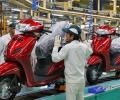
As the government plans no further extension of the scheme beyond FY24, the task is to achieve the unfinished target of subsidising 914,707 EVs.
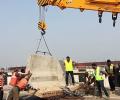
Ahead of farmers' 'Delhi Chalo March', the Delhi Police has intensified security arrangements at Singhu, Ghazipur and Tikri borders and installed nails along with barricades to prevent vehicles carrying protesters from entering the city, officials said on Sunday.

'We participate in the design/development of components and systems for electric vehicles, internal combustion engines, and hybrid vehicles.'
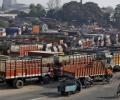
Combined sales at top four manufacturers - Tata Motors, Ashok Leyland, Volvo Eicher Commercial Vehicles, and Mahindra and Mahindra - dropped 20 per cent to 20,324 units in November
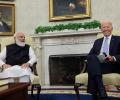
'The message that we intend to leave with at the end of this trip is one of real gratitude for the friendship and the close partnership that President Biden and Prime Minister Modi have enjoyed over the last four years, but also one of tremendous optimism because we see a lot of opportunity in the future.'
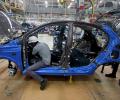
Automobile industry in India is going through a long-term structural slowdown as the compound annual growth rate (CAGR) across all major vehicle segments has witnessed a decline over the last three decades, as per industry body SIAM. The auto industry has been facing headwinds even before the COVID-19 pandemic derailed the entire sector last year, a research conducted by the Society of Indian Automobile Manufacturers (SIAM) has revealed. The study clearly shows that the pandemic is not the only reason for the auto sector slowdown, which is facing deeper structural issues that need attention, the industry body noted.
